
SMART FARM
How does aquaponics work?
Growing vegetables with the water fish live in, then sending the water the vegetables have filtered back to the fish. Here's how it works, and where MIEDEN FARM is now.
September 30, 2026
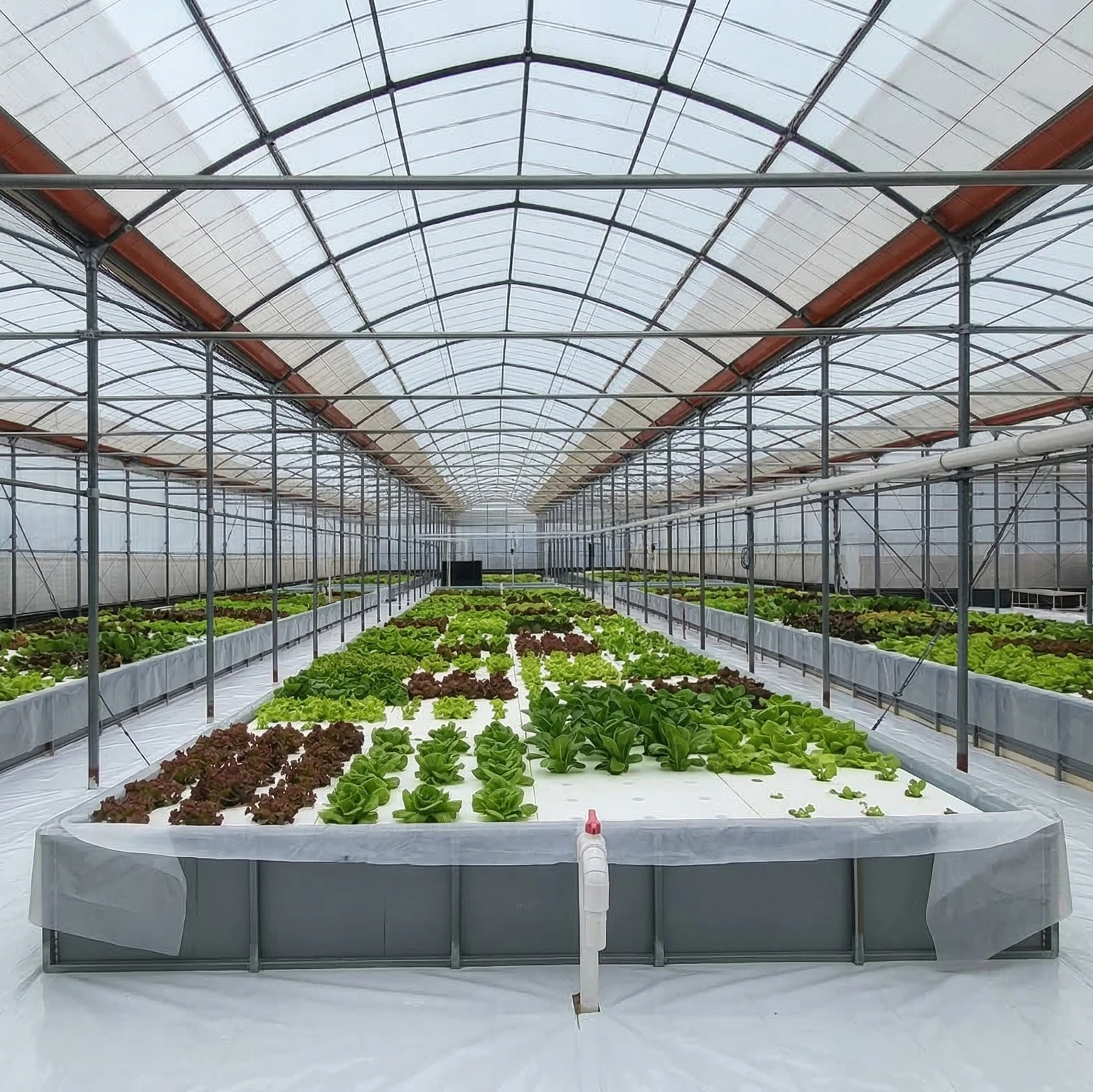
Aquaponics is a circular growing method: vegetables are grown with the water fish live in, and the water the vegetables have filtered goes back to the fish. The name combines aquaculture (raising fish) and hydroponics, and the fish and vegetables share the same water.
Hydroponic beds in the MIEDEN FARM greenhouse. Many varieties of leafy greens grow on the water.
How does fish waste become food for vegetables?
Here is the general principle. The waste fish excrete after eating contains ammonia. Ammonia is harmful to fish, but nitrifying bacteria living in the water turn it into nitrite and then nitrate. Nitrate is a form of nitrogen that plants easily take up through their roots, so the vegetables grow by drawing in this water. As the vegetables take up nutrients, the water returns to a state closer to what the fish need.
One full cycle
- ① Fish — eat and excrete waste (ammonia)
- ② Nitrifying bacteria — turn ammonia into nitrite, then nitrate
- ③ Vegetables — grow by taking up nitrate and other nutrients through their roots
- ④ Back to the fish — water filtered by the vegetables returns to the tank
No soil — roots grow in water
There are many ways to grow vegetables, and MIEDEN FARM uses DWC (Deep Water Culture). Foam boards float on long beds filled with water, and seedlings are set into holes in the boards so their roots grow submerged. Air stones keep bubbling air into the water so the roots can breathe, and pumps circulate the water.
Where MIEDEN FARM is now
MIEDEN FARM is building an aquaponics facility in its greenhouse in Hangyeong, Jeju. At first we ran just one of the six beds to find problems, and before bringing in fish we grew vegetables with nutrient solution to test the system. So in the early stage it was closer to nutrient-solution hydroponics than aquaponics. We've recorded this process in other FIELD NOTES posts.
In September 2026 we grew 12 kinds of European leafy greens together in one bed, comparing growth and leaf shape by leaf type — butterhead, batavia, red, multi-leaf and more. Based on this comparison, we're shaping the mix for MIEDEN FARM European salad greens.
KEY NOTES
- · Growing method: DWC beds (roots submerged in water)
- · Early operation: test growing with nutrient solution before adding fish
- · September 2026: 12 kinds of European leafy greens compared in one bed
What we pay most attention to in aquaponics
In aquaponics, fish, bacteria and vegetables all share the same water, so if one wobbles, the others are affected too. That's why it matters to keep checking the water's condition in numbers. MIEDEN FARM records values such as pH, EC (nutrient concentration), water temperature and dissolved oxygen with sensors, trying to catch warning signs early.
European leafy greens grown with aquaponics are not on sale yet. Once a sales schedule is set, we'll announce it on the MIEDEN FARM European salad greens page in PRODUCTS and in NOW.
Related Product
Next Reads
FIELD SYSTEM — 03/03
April 19, 2026
How the aquaponics we'd only imagined became a real facility
A hydroponic test stage, settling the system with nutrient solution before adding fish. The aquaponics we'd prepared for so long finally took its first step.
FIELD SYSTEM — 01/03
FROM THE ARCHIVE · 2024
After giving up on mangoes
As we dropped our plan to grow mangoes and turned toward growing many kinds of crops, aquaponics naturally caught our eye.
Comments
No comments yet.