
GROW
When the lettuce started looking wrong, what we checked one by one
One of our hydroponic beds was covered in algae. There wasn't just one cause — a record of narrowing down the problem, from observation to response.
May 3, 2026
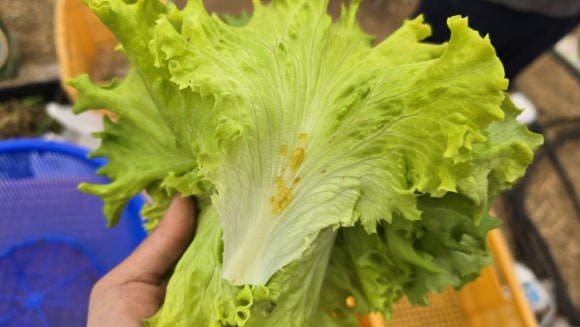
The nutrient-solution test growing we ran in one of the six hydroponic beds in the greenhouse failed. We didn't get the EC right, and we installed the UV sterilizer late, so algae grew in the water.
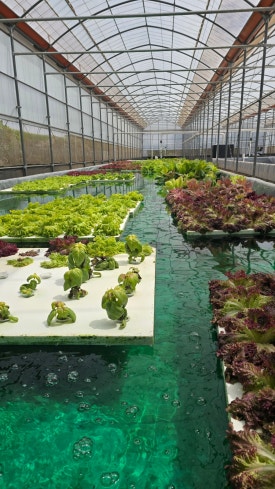
The nutrient bed turned a minty color.
Why did the algae grow?
There wasn't just one cause. EC wasn't managed properly, and the UV unit went in late, so sterilization came late. Many seedlings had also missed their transplanting time and were planted leggy. After clearing the crops from the first bed and cleaning out the algae, we opened the bed next to it and decided to split the existing nutrient water between the two beds and dilute it. At the time we planned to use fish water instead of nutrient solution once the fish arrived, but the fish had to be flown in from the mainland, so the date kept getting pushed back.
Different signals on every leaf
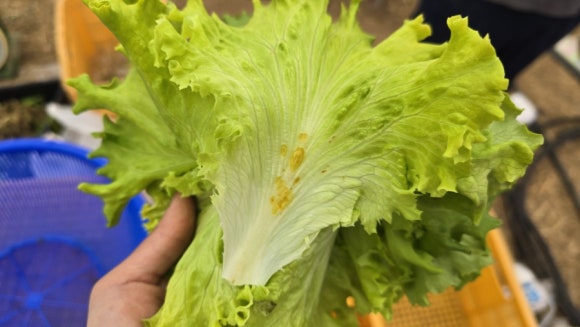
We looked closely at each leaf with brown spots.
FIELD NOTE
- · The pest and disease names and causes below are estimates we narrowed down in the field with the help of AI tools; they are not an official pest or disease diagnosis.
Leaf signals we observed then (field estimates)
- · Leaves or roots turning brown and mushy — likely bacterial soft rot
- · Eggs and larvae inside the leaves — likely leaf miners; it seemed the only response was to remove the leaves as soon as we found them
- · Speckled marks on the butterhead — likely feeding marks from thrips
- · Feeding marks and holes on the arugula — likely thrips, aphids, whiteflies or leaf beetles
- · Leaf tips yellowing and drying (tipburn) — likely calcium and water stress, ultimately an EC problem
- · Leaves turning yellow and mottled — likely a nutrition problem where high EC blocked magnesium and potassium uptake
What we tried
We tested a small amount of homemade eco-friendly control methods at the time, but diagnosing and controlling pests and diseases needs a separate judgment based on crop condition and registered products. Back then, we sprayed in the morning, ran the circulation fans so water wouldn't pool in the inner leaves, tested on a few plants first, and then decided whether to apply it to all of them.
What we decided to keep doing
At the time we decided to check water quality, roots and leaves every day, lay plastic sheeting on the floor to keep out insects and pathogens, monitor insects with sticky traps, and remove diseased leaves right away. Blower fans, circulation fans and a summer shade screen weren't installed yet because of funding, so we were preparing to install them. Recording sowing, transplanting and harvest dates to prevent leggy seedlings is also a habit we started then.
First we need to finish clearing the remaining crops fast. Planting took forever.. and clearing takes forever too. All that labor.. let's call it the price of learning.
FIELD CHECKLIST
- Why it failed: poor EC management + late UV installation → algae; delayed transplanting → leggy seedlings
- Problems identified (estimates then): bacterial soft rot, leaf miners, thrips, aphids and whiteflies, tipburn, magnesium and potassium deficiency
- What we were preparing then: blower and circulation fans, a shade screen (delayed due to funding)
Looking back now — the habit of writing down these diagnoses and checklists led to the way we grow today, recording and checking every day.
Related Story
Related Product
Comments
No comments yet.